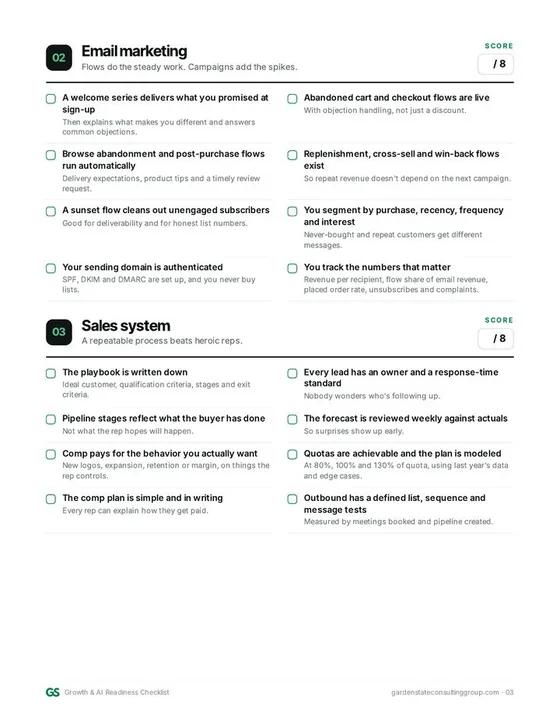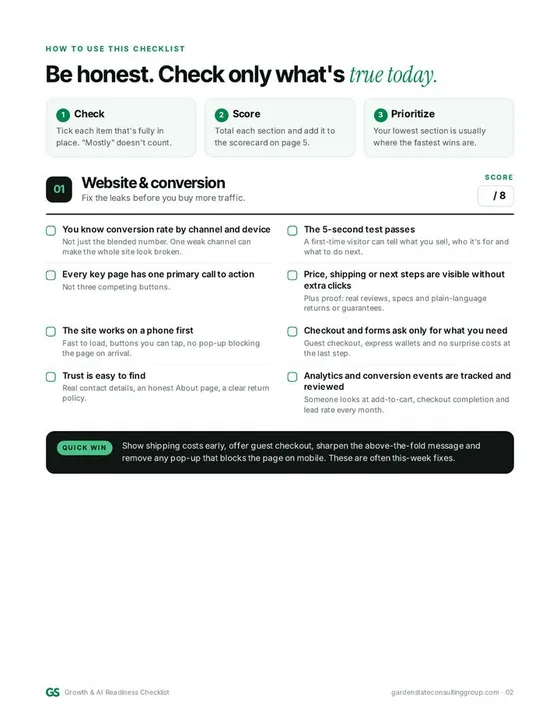
For a DTC brand, automated flows matter more than campaigns. Build the core flows, from welcome and abandoned cart to post-purchase, win-back and sunset, segment on behavior, protect deliverability, then layer a sensible campaign rhythm on top.
Email is the one marketing channel you actually own. No algorithm decides who sees it, and you don't pay more every time a platform raises its prices. For a DTC brand, that makes it one of the most valuable channels you have.
I recently helped a DTC brand lift email revenue by 32% in 60 days. Every brand is different, so I'm not going to hand you a magic template. But when I look at a brand's email program, I start in the same place every time: the automated flows.
Flows vs. campaigns: know the difference
Campaigns are the emails you send to a list on a schedule: a new product, a sale, a story. They're one-to-many and tied to a date.
Flows are automated sequences triggered by what a customer does: signing up, browsing, adding to cart, buying, going quiet. They're one-to-one and tied to behavior.
Campaigns get most of the attention because they're visible. Flows quietly do a lot of the work, because they reach people at the exact moment they're showing intent. If your flows are missing or neglected, fix them before you plan another campaign calendar.
The 7 flows every DTC brand needs
1. Welcome series
Trigger: someone joins your list.
This is your first impression and usually your most engaged audience. Use it to:
- Deliver whatever you promised at sign-up, right away.
- Explain what makes your brand different.
- Show your best sellers and social proof.
- Answer the common objections: shipping, returns, sizing, quality.
Common mistake: one email and done. A welcome series should be a short sequence over the first week or two, not a single coupon.
2. Abandoned cart and checkout
Trigger: someone adds to cart or starts checkout and doesn't buy.
This is the highest-intent flow you have. Keep it simple:
- First reminder soon after they leave, showing exactly what's in the cart.
- A follow-up that handles objections: reviews, shipping, returns.
- A final nudge. Use incentives carefully, or you'll train customers to abandon on purpose.
Common mistake: leading with a discount in the first email. Often a clear reminder is enough.
3. Browse abandonment
Trigger: a known subscriber views products but doesn't add to cart.
Lighter touch than cart abandonment. Show what they looked at, plus related products or best sellers. One or two emails is plenty.
4. Post-purchase
Trigger: someone places an order.
Most brands send an order confirmation and a shipping notice and then go quiet. That's a missed opportunity. Use post-purchase emails to:
- Set expectations on delivery.
- Help them get the most out of the product (how to use it, care tips).
- Ask for a review once they've had time to use it.
- Introduce related products when it makes sense.
The goal is a second order. A customer who buys twice is far more valuable than one who buys once.
5. Replenishment and cross-sell
Trigger: time since purchase, based on how long the product typically lasts.
If you sell anything consumable, this flow should be timed to when customers are likely to run out. For non-consumables, use it to recommend complementary products.
6. Win-back
Trigger: a customer hasn't purchased in longer than your normal buying cycle.
Remind them why they bought in the first place, show what's new, and give them a reason to come back. Look at your own data to decide when "lapsed" begins. It depends entirely on your product.
7. Sunset
Trigger: a subscriber hasn't opened or clicked in a long time.
This one doesn't make money directly, but it protects everything else. Send a last-chance email, and if they still don't engage, stop mailing them. Sending to people who never open hurts your deliverability, which hurts every other email you send.
Segmentation that actually matters
You don't need dozens of segments. Start with the ones that change what you'd say:
- Purchasers vs. non-purchasers. Someone who has never bought needs a different message than a repeat customer.
- Recency. When did they last buy or engage?
- Frequency. One-time buyers vs. repeat buyers.
- Product interest. What did they buy or browse?
Get those four right and your campaigns will be more relevant without adding complexity.
Deliverability basics
The best email in the world doesn't matter if it lands in spam. Cover the basics:
- Authenticate your sending domain (SPF, DKIM and DMARC).
- Keep your list clean. Remove hard bounces and run the sunset flow.
- Don't buy lists. Ever.
- Watch your spam complaint and unsubscribe rates after every send.
A sensible campaign rhythm
Once flows are running, campaigns become easier to plan. Pick a cadence your team can sustain and your audience will tolerate, then mix the content:
- Product launches and restocks
- Education: how to use, how to choose
- Stories: the brand, the people, the process
- Offers, used sparingly
Send more to your engaged segments and less to people who rarely open.
What to measure
Opens are a weak signal these days. Focus on:
- Revenue per recipient for campaigns and flows
- Flow revenue as a share of total email revenue
- Placed order rate
- Unsubscribe and spam complaint rates
- List growth from real sign-ups
Review flows monthly. Small changes to timing, subject lines or the first email in a sequence can make a real difference.
A 30-day plan to get started
- Week 1: audit what exists. Which flows are live? When were they last updated? What do the numbers say?
- Week 2: fix or build the welcome series and abandoned cart flows first. They're closest to revenue.
- Week 3: add post-purchase and browse abandonment.
- Week 4: set up win-back and sunset, then clean up your segments and plan the next month of campaigns.
The bottom line
Email revenue doesn't come from sending more. It comes from sending the right message when a customer is ready to hear it. Build the flows, keep the list healthy and measure what matters.
If your email program feels like an afterthought, it's one of the first places I'd look. Email marketing campaigns that drive engagement, retention and revenue are one of the core things I help companies build.